
Events
Event details are subject to change.
Events
-
-

Apalachicola River & Floodplain Exploration
Apalachicola National Estuarine Research Reserve 108 Island Dr., Eastpoint, FL, United StatesThe Apalachicola River has been called “the Lifeblood of the Bay.” Come learn about the ecology, culture, and history of the Apalachicola River and floodplain, and the impact interstate relationships play in the control of the river. After the in-class portion, we will embark on a journey up the river aboard the ANERR research vessel the Tideline to get an up-close look at some of the floodplain ecosystems and distributaries of the river.
This class is free, however reservations are required.To register, go to https://RiverClassOctNovDec2026.eventbrite.com
Free -

Oyster Ecology
Apalachicola National Estuarine Research Reserve 108 Island Dr., Eastpoint, FL, United StatesLearn about the role oysters play in the health of Apalachicola Bay. Discover what makes the bay so ideal for growing oysters, what gives our oysters their distinct flavor, and how oyster bars benefit the ecosystem. We will also look at possible causes of the oysters collapse and what is being done to restore them to Apalachicola Bay. Participants will get the chance examine these creatures under our high-powered microscope, and learn more about the animals that live in our bay and along the tidal flats.
To register, go to https://OysterClassOctNovDec2026.eventbrite.com
Free -
Reconnecting Secondary Channels on the Apalachicola River Floodplain
Laterally connected floodplains are environments of tremendous hydrologic and ecological importance, and secondary channels on floodplains play an outsized role as hotspots of biodiversity and ecological productivity. This is true of the Apalachicola River, whose 170-km-long mainstem is flanked by another 650 km of secondary channels (‘sloughs’), which create a complex mosaic of off-channel water bodies that support a diverse assemblage of fish, freshwater mussels, and other organisms. Fluvial geomorphologist Matt Kondolf explains how a failed navigation project in the second half of the 20th century caused extensive disruption to the channel geomorphology and ecology. Dredging exposed large areas of sand, some of which was transported in suspension into sloughs, where it deposited sediment plugs that can block flow into sloughs. Now that the river has partially recovered from this massive disturbance, three pilot projects are testing the effectiveness of removing sand blockages to reconnect sloughs at lower flows, measuring changes in hydrologic and ecological connectivity (e.g., flows, water quality, aquatic species and life stages).
Registration information coming soon.
-
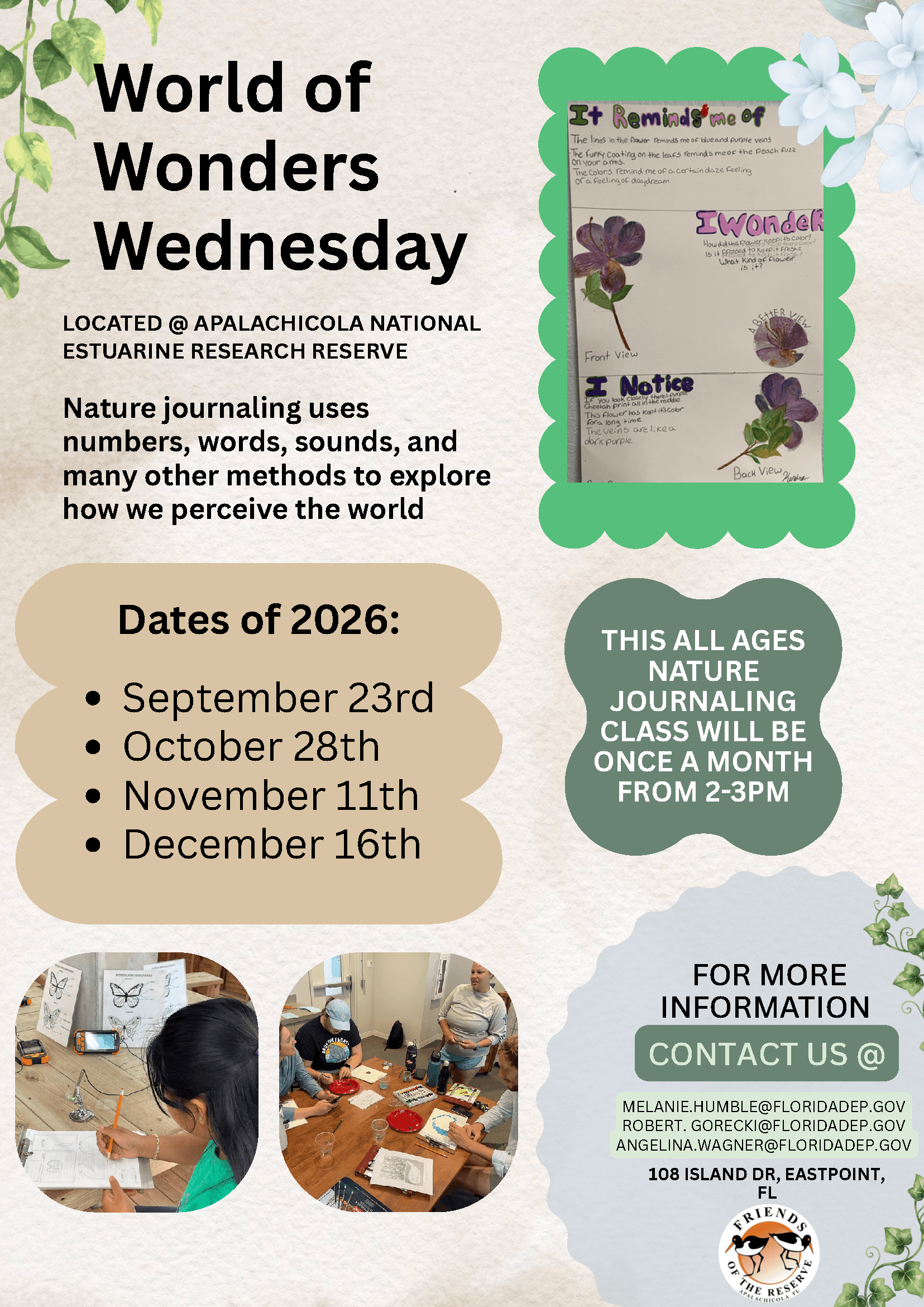
World of Wonders Wednesday
Nature journaling uses numbers, words, sounds, and many other methods to explore how we perceive the world. All ages are welcome! This will be an hour-long class (2-3pm) where you will get a chance to connect with our estuary.
This class is for beginners and experts and everybody in between. Feel free to bring your own supplies, but we will have everything you will need.
Come rain or shine everything will be fine.
-

Apalachicola Estuary Exploration
Apalachicola National Estuarine Research Reserve 108 Island Dr., Eastpoint, FL, United StatesEstuaries are some of the most productive and complex ecosystems on the planet, serving as critical habitats for diverse species and acting as natural filters for water quality. In this course, you'll explore the unique characteristics that make estuaries such vital environments. We'll examine the rich biodiversity they support and discuss their importance to both the environment and human communities. Whether you're a nature enthusiast or simply curious about these dynamic ecosystems, this course will provide you with a deeper appreciation for estuaries and the crucial role they play in our world.
To register, go to https://EstuaryClassOctDec2026.eventbrite.com
Free -
-

Bay Friendly Landscaping
Apalachicola National Estuarine Research Reserve 108 Island Dr., Eastpoint, FL, United StatesYard design and maintenance can have a big effect on adjacent water bodies. Participants in this workshop will learn about resources to help them transform their yard into a luscious bay conscious landscape. The class will feature resources on landscaping in Florida's unique soil conditions, where to buy plants and seeds, innovative Green Infrastructure techniques such as rain gardens, green roofs, and bio-swales. Come find out how to be good to the bay and reduce the time you spend on maintenance!
To register, go to https://BayFriendlyClassOctNovDec2026.eventbrite.com
Free -
Oyster Ecology
Apalachicola National Estuarine Research Reserve 108 Island Dr., Eastpoint, FL, United StatesLearn about the role oysters play in the health of Apalachicola Bay. Discover what makes the bay so ideal for growing oysters, what gives our oysters their distinct flavor, and how oyster bars benefit the ecosystem. We will also look at possible causes of the oysters collapse and what is being done to restore them to Apalachicola Bay. Participants will get the chance examine these creatures under our high-powered microscope, and learn more about the animals that live in our bay and along the tidal flats.
To register, go to https://OysterClassOctNovDec2026.eventbrite.com
Free -
World of Wonders Wednesday
Nature journaling uses numbers, words, sounds, and many other methods to explore how we perceive the world. All ages are welcome! This will be an hour-long class (2-3pm) where you will get a chance to connect with our estuary.
This class is for beginners and experts and everybody in between. Feel free to bring your own supplies, but we will have everything you will need.
Come rain or shine everything will be fine.
-
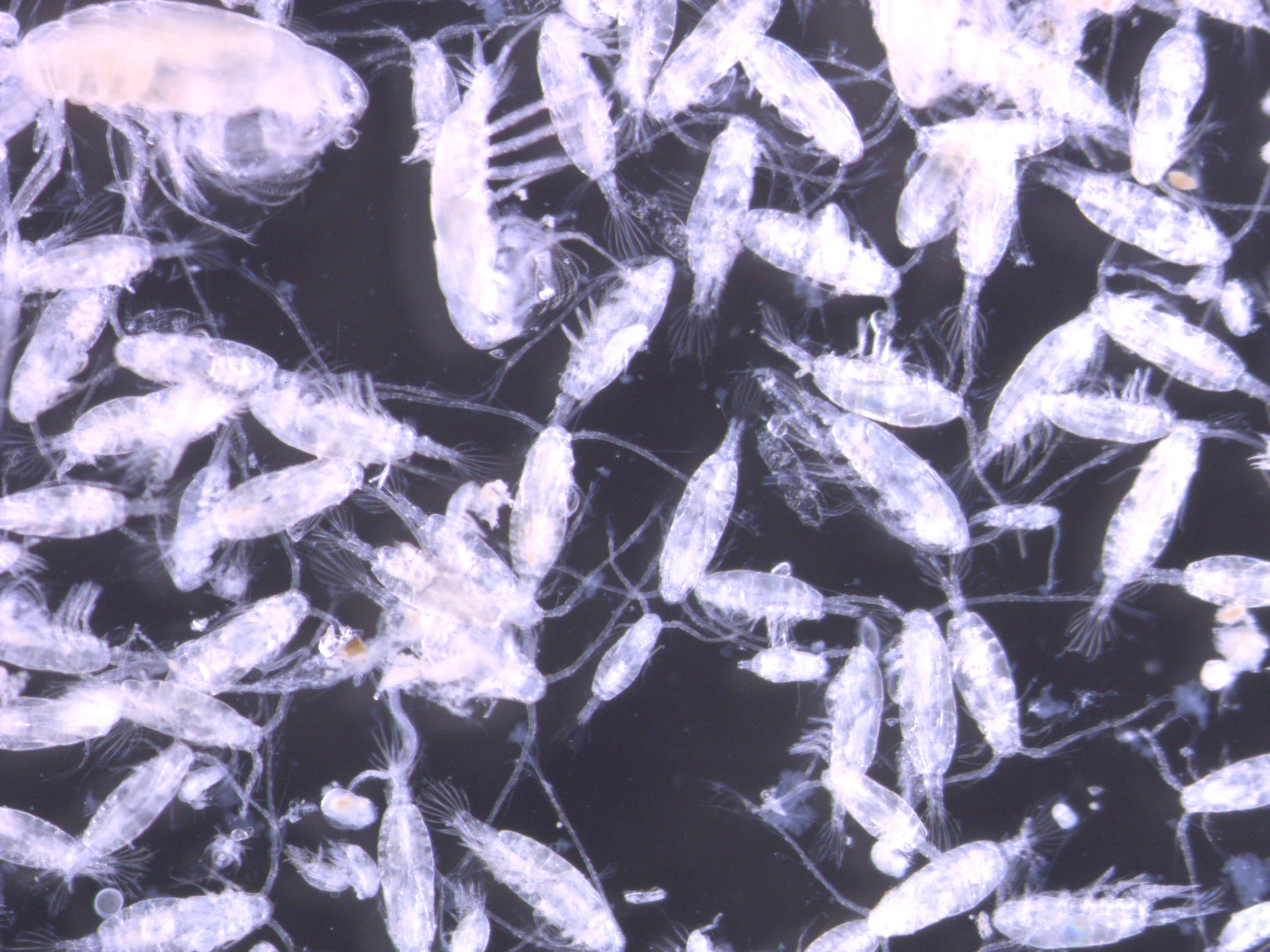
Zooplankton Distribution in Apalachicola Bay
Zooplankton play an integral role in coastal food webs, and a greater understanding of their community structure is necessary to link primary producers and secondary/tertiary consumers. In 2016, a long-term monitoring project was initiated to begin characterizing the zooplankton communities of Apalachicola Bay. Sam will share information on distribution patterns observed in these communities and discuss linkages to environmental parameters and nutrient inputs over a two-year period (2018-2019).
Registration information coming soon. -
Apalachicola River & Floodplain Exploration
Apalachicola National Estuarine Research Reserve 108 Island Dr., Eastpoint, FL, United StatesThe Apalachicola River has been called “the Lifeblood of the Bay.” Come learn about the ecology, culture, and history of the Apalachicola River and floodplain, and the impact interstate relationships play in the control of the river. After the in-class portion, we will embark on a journey up the river aboard the ANERR research vessel the Tideline to get an up-close look at some of the floodplain ecosystems and distributaries of the river.
This class is free, however reservations are required.To register, go to https://RiverClassOctNovDec2026.eventbrite.com
Free