
Annual Report – Summer 2026

Message from the Manager
By Kim Miller, Program Manager
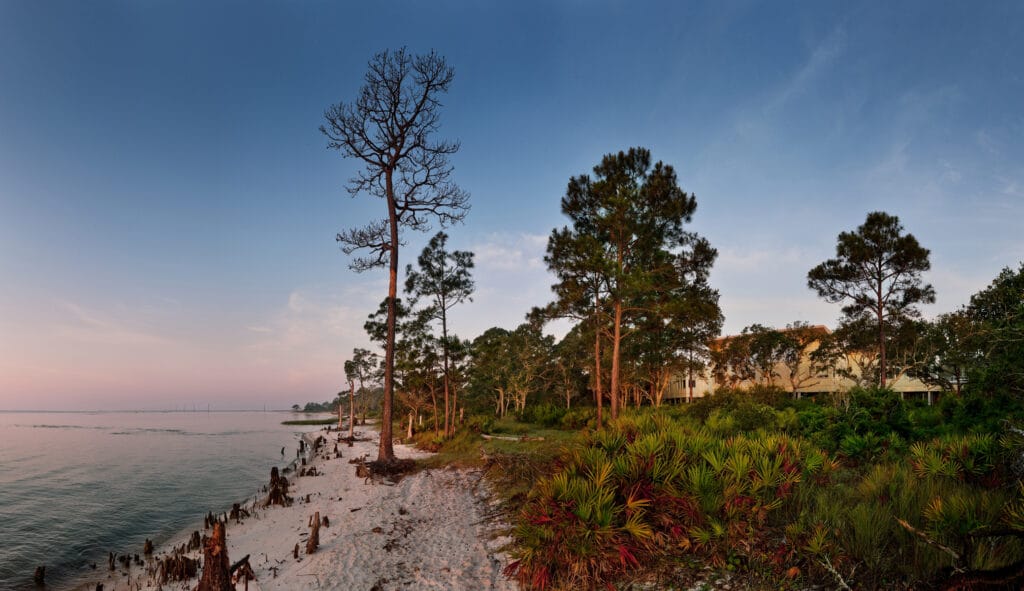
The Apalachicola River and Bay watershed is an invaluable ecological and economic treasure. Serving as a vital freshwater lifeline to the eastern Gulf, it supports unmatched biodiversity and a historic seafood economy. However, the system faces threats from upstream water withdrawals, and the loss of 90% of wild oyster populations.
Driven by a dedicated staff, the Reserve advanced critical land and water protection, cutting-edge science, and community empowerment to safeguard these natural resources.
Over the last year, the Reserve’s Stewardship sector worked to achieve goals in conserving local habitats. Teams monitored sea turtle nesting, combated invasive species, and tracked marsh migration and mangrove expansion. Notably, staff integrated advanced drone technology, revolutionizing how the Reserve maps and monitors shifting coastal habitats with pinpoint accuracy.
Simultaneously, the Research sector tracked environmental health around the clock. By continuously collecting water quality, nutrient, and meteorological data, scientists provided the critical baselines needed to navigate the bay’s challenges and the foundation for long-term ecosystem defense and adaptive coastal management. The team also translated this data into action through hands-on restoration, expanding living shoreline projects to naturally stabilize vulnerable coastlines.
The Reserve’s impact extended deep into the local community through powerful partnerships. The Reserve strengthened its collaboration with the FloridaCorps, providing hands-on restoration training, and vital life skills to local youth and continued to actively align user groups from the local seafood industry, non-profits, academic institutions, and regional governments, as part of The Partnership for a Resilient Apalachicola Bay, to build consensus on watershed management.
Beyond the field and lab, the Education and Training and Engagement sectors generated tremendous momentum with the community throughout the year. Ongoing estuarine programs inspired local and regional students and teachers, while upgrades to the Nature Center, in coordination with the Friends of the Reserve, enhanced exhibits to offer visitors a more immersive experience. Finally, the Training and Engagement sector fostered deep collaboration with local leaders and stakeholders, increasing community knowledge to drive smarter, resilient coastal management decisions. These achievements are a direct result of the tireless hard work, passion, and dedication of the Reserve’s exceptional staff. The Reserve also extends its deepest gratitude to the many invaluable volunteers, interns and regional partners whose collaboration makes this vital work possible. Together, these dedicated individuals and organizations are ensuring a vibrant, protected, and resilient future for the Apalachicola River and Bay.
Stewardship Program
By Lexington Preheim, Stewardship Coordinator
The goal of the stewardship program is to protect, conserve, and restore the lands and waters of the Reserve. This is accomplished by hands-on management and restoration, and through partnerships with other public and private land managers and volunteers. The team focuses on a diversity of projects, including habitat management and mapping, listed species monitoring, invasive species control, land acquisition, cultural resource protection, outreach programming, restoration, and facilitation of public use and access.
The Reserve stewardship staff welcomed their summer/fall intern. Juliana Duffey is a recent graduate from Georgia Southern University. She will be helping with our busy species monitoring season as well as assisting with our other stewardship projects. We are happy to have her on the team!
Species Monitoring and Resource Management
2025 Sea Turtle Nesting Update
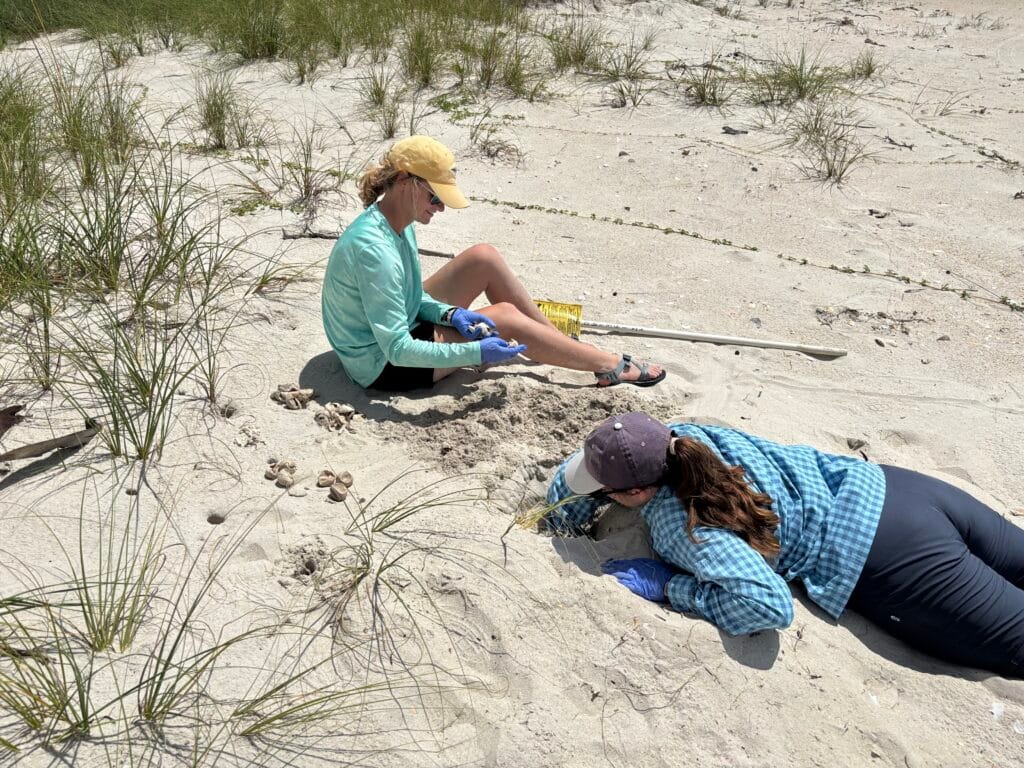
The stewardship team worked hard during the summer of 2025 for our species monitoring. Turtle nesting was monitored from May 1st to October 31st, 2025. New nests were marked and monitored throughout the season and the clutch was evaluated after emerging to understand hatching success. We were grateful to have a low storm season this year and no hurricane-related monitoring delays or damage to the island. Little St. George Island had 164 nests and 247 false crawls. Five of the nests on Little St. George Island were from green sea turtles, and the rest were from loggerhead sea turtles. The team has begun 2026 monitoring, and we are excited to see what the season brings!
Shorebird Restoration
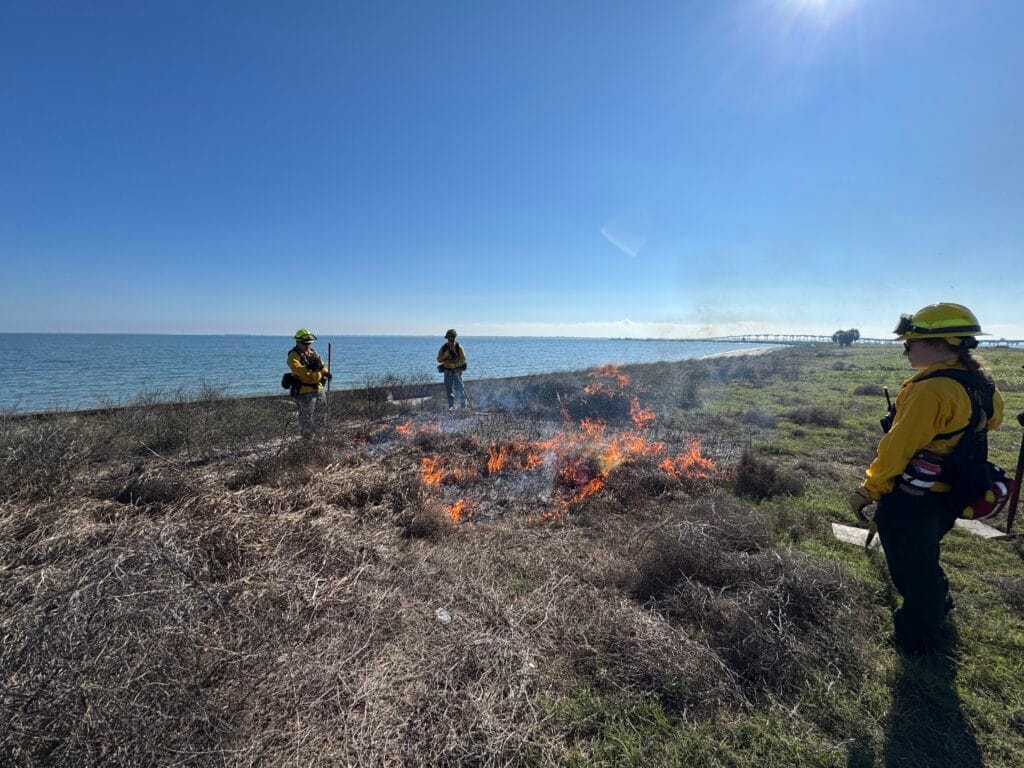
The St. George Island Causeway is a mile-long island located in the St. George Island Sound, and it is designated as a Critical Wildlife Area due to it supporting a large number of shorebird nesting. The St. George Island Working Group is comprised of staff from Florida Fish and Wildlife Conservation Commission (FWC), Audubon, and the Reserve with the goal of supporting the mission of the Critical Wildlife Area. As invasive grass expands and limits the amount of nesting habitat, a pilot project was initiated in 2023 utilizing two test plots to test vegetation removal methods. The team was able to complete a prescribed fire in the plots in December 2025. As we look into this nesting season, the vegetation removal methods are starting to work and Audubon FL who conducts nesting surveys on the Causeway has seen an increase of nesting in the plots!
Invasive Species
We continually try to reduce the amount of invasive species present within the Reserve. Staff monitor, map, and treat invasives species which can negatively impact the native communities. Staff tackled infestations of Chinese tallow, Peruvian primrose, Camphor tree, Chinese wisteria, Cherokee rose, and more!
Public Use and Access
Recreation
The reserve offers many recreational opportunities such as hiking, camping, and kayaking. Staff work to maintain kiosks and interpretive signage, trails, and campsites for visitors to enjoy the managed natural areas. For recreation opportunities within the reserve, view the Roadmap to Recreation.
Cultural Resources
Staff annually monitor archeological sites such as shell middens, turpentine camps, and historical structures on the Reserve’s directly managed lands. Sites are photographed, assessed for any potential threats, and evaluated for stability. We continue to collaborate with outside archeology researchers to learn more about these sites.
Habitat Mapping and Monitoring
Drone Monitoring
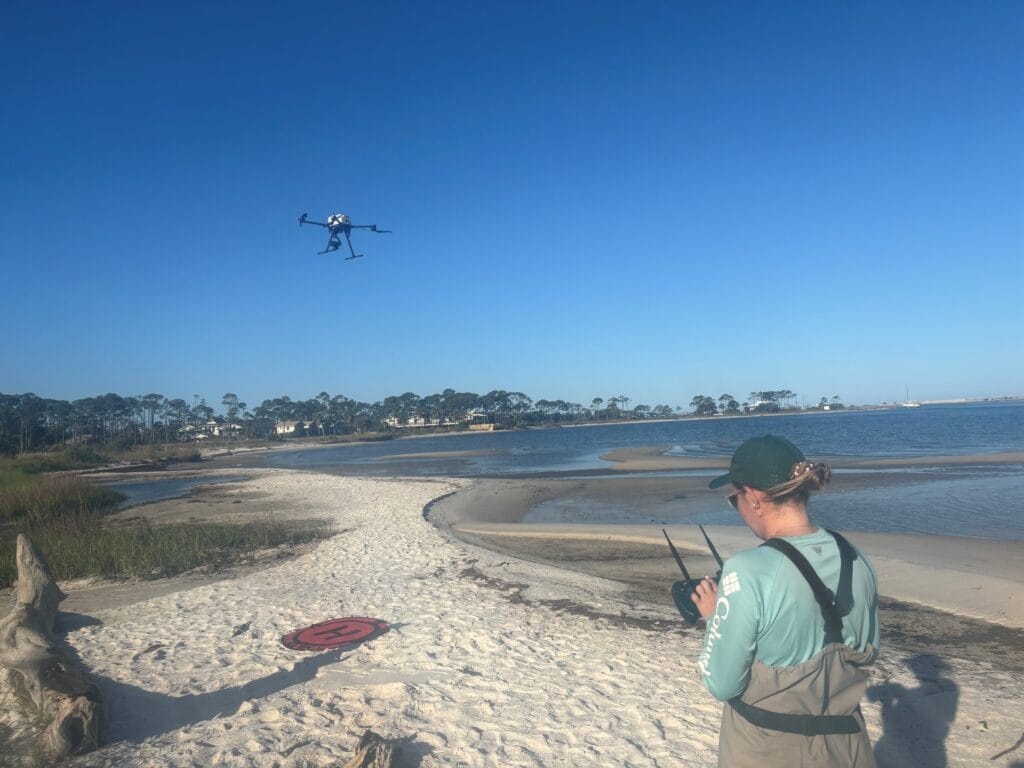
As a continuation of a previous project, Drone the NERRs, staff were able to fly the IF800 drone at the emergent vegetation sites to compare on-the-ground survey data to aerial imagery. From the imagery, we were able to analyze vegetated percent cover, ecotone delineation, and create an elevation model. An RTK survey was also completed to monitor long-term elevation changes in the coastal marshes. All of this information will better inform us how marshes are changing.
Mangroves
The stewardship team has been monitoring mangroves throughout the county since 2018 to research the northern range expansion of both red mangrove, Rhizophora mangle and black mangrove, Avicennia germinans. This year, eight transects were monitored within the reserve boundary. Metrics were taken such as tree height, crown width, and species of surrounding vegetation which will show how the population is developing.
Photopoint Monitoring
Biannual photopoints were completed in December 2025 and June 2026 to monitor visual changes. Photopoint monitoring is the process of taking photos at the same geographic location over time to detect how the landscape and vegetation of an area is changing to, which helps land managers make decisions for environmental planning and management. The Reserve also manages two citizen science Chronolog stations on St. George Island at the base of the bridge and in Nick’s Hole.
Research Program
By Megan Lamb, Research Coordinator
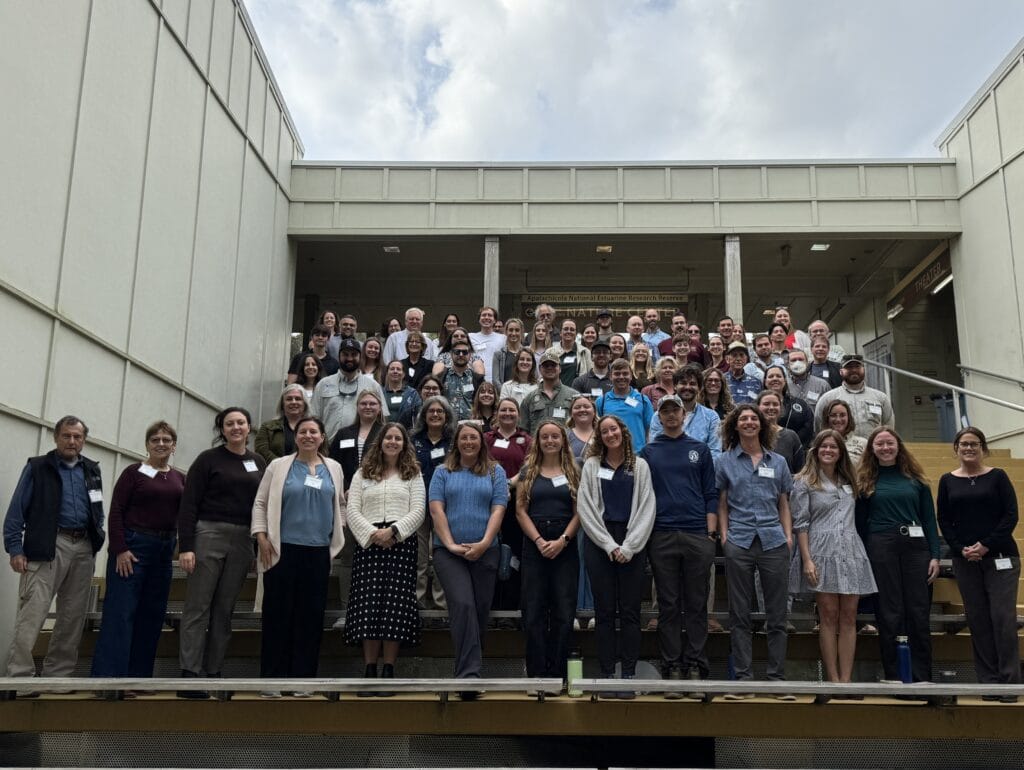
The Research program manages long-term monitoring programs including the Reserve’s System-Wide Monitoring Program focusing on water quality, nutrient levels, and meteorological data; monitoring wetland elevation and species composition in the estuary; biological programs focusing on plankton, juvenile fish abundance; and collaborating with visiting researchers focusing on priority issues impacting the productivity and biodiversity in the watershed and bay. In February of this year, we hosted the Reserve’s fifth Research Symposium which showcased the work of Reserve staff and many researchers conducting studies within the Reserve. Being our largest Symposium to date, we are proud to host this event that highlights the variety of work being done by amazing partners throughout the Reserve.
New faces at the Reserve
This winter we welcomed two new Research staff members to replace team members who departed in the fall. Ethan Bourque worked on a variety of System-Wide Monitoring Program (SWMP) water quality roles for ten years with the Reserve. We’re happy he’s staying in the NERRs family at the Sapelo Island NERR in Georgia. Stephanie Roscoe served as the Wetland and Water Level Program (WWL) lead for the past year and returned to her roots in working with wildlife. We wish Ethan and Stephanie the best on their journeys and are excited to welcome new faces! Lena Kury joins us from the nearby Central Panhandle Aquatic Preserve office and will serve as the lead for the nutrient and weather SWMP components. Meredith O’Donnell moved from the northeast U.S. to serve as the WWL program lead and will split her time between the Research and Stewardship sections of the Reserve.
Every summer the Research team searches for an intern to join our team during our busiest months. This summer we are joined by Madison Meadows, who just graduated with a B.S. from Ohio Northern University. Madi will be assisting with everything from water quality sampling to data entry to fisheries trawling and more. We’re glad to have her join us!
System-Wide Monitoring Program
The System-Wide Monitoring Program (SWMP or “Swamp”) serves as the backbone of the national system’s long-term research initiative. It includes three main components: 1) continuous water quality monitoring that monitors conditions every 15 minutes at seven stations within the bay year-round, 2) continuous weather monitoring that collects 15-minute data at a station in East Bay, and 3) monthly sampling for nutrient and chlorophyll-a levels at 11 stations throughout the bay, and over a complete tidal cycle at one location in the bay. The Reserve started collecting continuous monitoring data in 1992 at two locations, though a few years passed before the national SWMP program was born, and the Reserve’s program has grown over the decades. A huge amount of time and effort goes into making sure this long-term dataset is of the highest quality, and it is used by researchers to evaluate trends and create bay hydrology models. All of our data is available from nerrsdata.org, and you can view some of our stations in real time here!
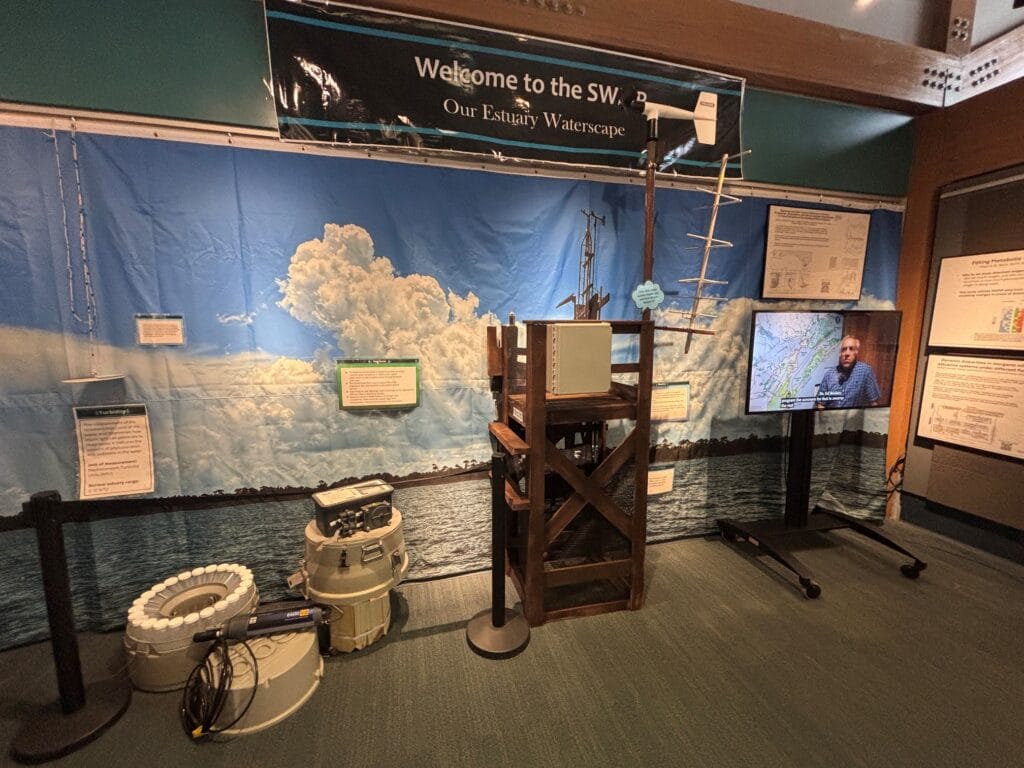
This year Research worked with our Education colleagues to create a new SWMP exhibit in the Nature Center. We hope you can stop the Center to see it in person or learn more about the SWMP program by viewing our new storymap about water quality.
Wetlands and Water Levels (WWL) Program and Marshes
The Wetlands and Water Levels (WWL) program is another national initiative that all Reserves across the system participate in, focusing on marsh habitats and monitoring change over time. Marshes provide critical habitat to many animals and serve important functions, such as reducing wave energy and storing carbon, but there are questions about marsh longevity in the face of changes and coastal flooding events. WWL at the Reserve includes three components: 1) 22 Surface Elevation Tables (SETs) spread across the river, bay, and barrier islands, 2) emergent marsh vegetation community composition, and 3) pore water quality at vegetation transects. Putting these components together gives us information about the status of our marshes and if they are maintaining themselves as coastal conditions change. Initiated in the early 2010’s, we are now able to use the data collected over time to make longer term analyses. Analysis of 14 years of the Reserve’s SET data by Dr. Josh Breithaupt with the Florida State University (FSU) Marine Lab shows a variety of outcomes occurring at the Reserve’s SET sites: some increasing in elevation, some decreasing, some not indicating much change.
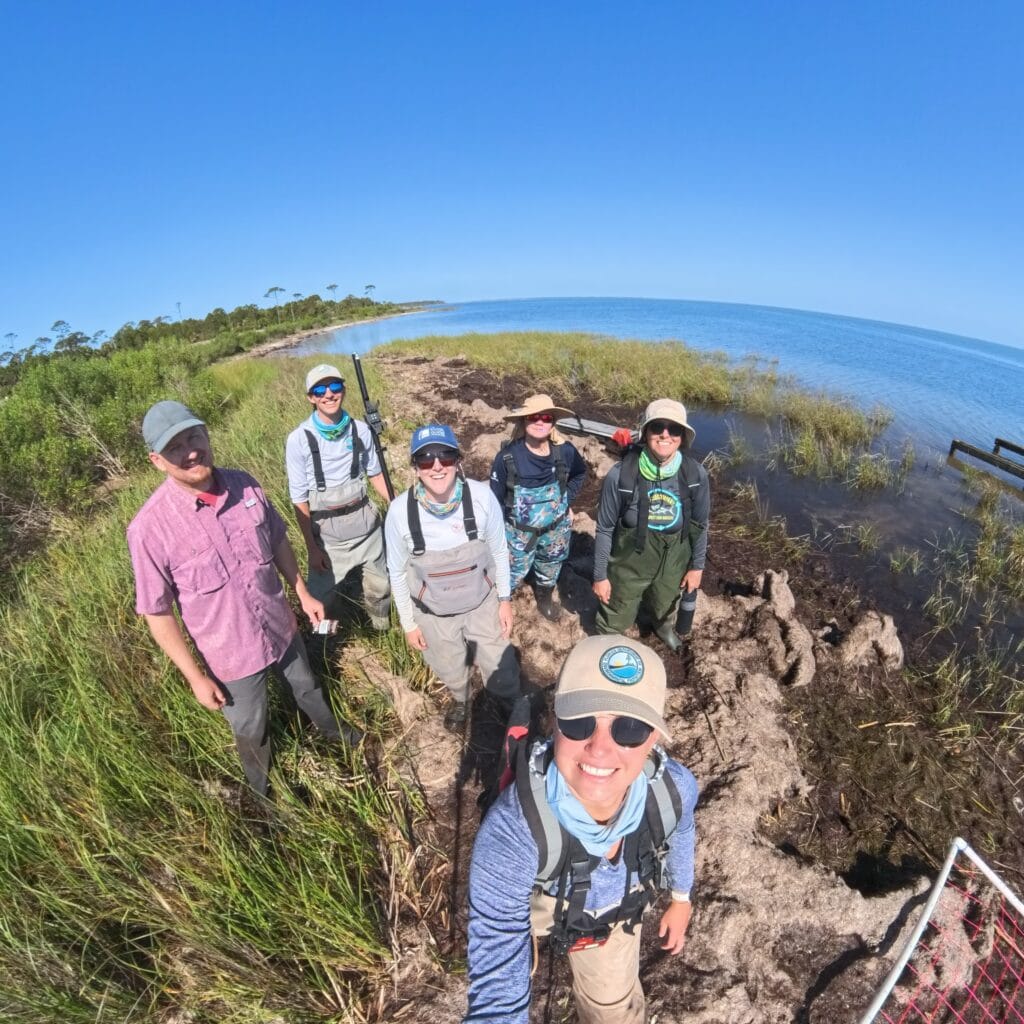
Marsh vegetation data is collected each spring annually and this year staff followed new standard operating procedures. We were able to collect high-quality elevation data to go with this dataset using real-time kinetic equipment in-house, thanks to new equipment and training. The Research team worked with the Stewardship team who conducted Uncrewed Aerial Systems (UAS) flights at some of the vegetation sites in conjunction with the on-the-ground vegetation surveys, which provides a broader view of the marsh at these sites. All of these activities put together provide us with information about the marsh’s vegetation community right now and will allow us to compare this year to past and future marsh information.
While we continue to collect our own long-term marsh monitoring data, the new year will include new collaborations. The Reserve is working with the Connecticut NERR and University Connecticut to serve as a project site examining carbon, nitrogen, and phosphorus dynamics in marshes across the Gulf and Southeast. The Reserve has also collected marsh vegetation data since 2014, looking at community composition, species, elevations, and density of plants. A National Marsh Synthesis team (NAMASTE) recently wrapped up a project synthesis of tidal marsh monitoring data across 20 NERRs, including Apalachicola’s WWL data. Work with the U.S. Department of Agriculture’s (USDA) Coastal Zone Soil Survey has wrapped up, with final reports coming out this fall expected to provide us with a huge amount of information about sediments in our local waterways and marshes. We will continue to monitor and add to our own long-term datasets as well as collaborate with visiting researchers to learn more about these incredibly important habitats.
2024-2026 Davidson Fellowship Coming to an End
It seems like just yesterday we welcomed our Davidson graduate fellow Harry Mumma to the Reserve. Harry is a graduate student from Notre Dame University studying estuarine productivity and metabolism across different benthic (bottom) environments. He has spent the last two years collecting data monthly across mud flats and seagrass beds, including productivity in the water column, air-gas exchange at the water’s surface, and benthic water column data. By collecting data in different types of habitats and across different seasons, Harry hopes to determine how different parameters like temperature, sunlight, and freshwater inputs affect productivity measurements. During his time here, Harry has become a member of our local community, joining the Reserve’s Fishy Fashion show, pickup soccer games, and bringing his pup to the dog park. We are wrapping up two years of hosting Harry and can’t wait to see his results and what he does next! The Margaret A. Davidson Fellowship is a two-year National Oceanic and Atmospheric Administration (NOAA) graduate fellowship program that provides fellowships to graduate students to conduct research within Reserves.
Restoration Program
By Alejandra Rios, Restoration Coordinator
The Reserve has been involved in restoration since its inception, but recently created a position dedicated entirely to restoration. The focus of the position is on coastal and hydrologic systems that are under threat from anthropogenic causes. In October of 2025, the Reserve hired Alejandra “Ale” Rios as the new Restoration Coordinator. With her father in the Navy, Ale had the privilege of being stationed on the East, West, and Gulf Coast. Ale holds a Bachelor’s of Science in Marine Biology from the College of Charleston and a Master’s of Environmental Management from Duke University. She is eager to work with stakeholders to identify, develop, implement, and maintain local restoration projects within the Apalachicola Watershed and Bay.
Stakeholder Engagement
Notably, the Restoration Coordinator participates in the Partnership for a Resilient Apalachicola Bay, or simply the Partnership, to understand perspectives from local stakeholders. After the oyster reef collapse in 2013 and fishery closure in 2020, Florida State University and the local community participated in the Apalachicola Bay System Initiative funded by Triumph Gulf Coast to discover the possible causes of the collapse and develop a restoration plan and a management plan. The Partnership acts as the permanent local stakeholder group responsible for working with agencies and the community to implement the restoration and management for the bay.
As a member of the Panhandle Estuarine Restoration Team (PERT), the Restoration Coordinator helped facilitate the Annual PERT Workshop in April of 2026. The workshop had the highest number of attendees on record, which is a testament to the restoration needs in the Panhandle. Topics at the workshop ranged from funding opportunities to permitting changes to technical solutions.
The Reserve envisions that the information gathered from these stakeholder groups will be added to a master list of restoration projects in the Apalachicola Watershed Coordination Blueprint (AWCB). The project was developed for the Reserve by the Balmoral Group. The aim of the project is to enhance collaboration among restoration practitioners throughout the watershed. Information was collected through numerous workshops, literature reviews, and data mining. The Resource Collaboration (ARCs) on the Mighty Networks platform allows professionals from upland, hydrologic, and coastal environments to readily share information.
Living Shorelines
Shoreline stabilization is an important area of restoration. The traditional method of building a sea wall can exacerbate erosion and eliminate habitat for wildlife. Living shorelines are a nature-based shoreline solution that encourages sediment accretion and reduces wave and tidal impacts on the shore while building habitat. The Reserve has implemented five living shorelines within the bay since 1984. Our strong partnership with the FloridaCorps, individuals dedicated to restoration in the Panhandle, has allowed us to expand our efforts. The FloridaCorps is a reliable partner and has extended construction on the living shorelines at Cat Point, Little St. George Island and Franklin 98.
Vertical Oyster Gardens
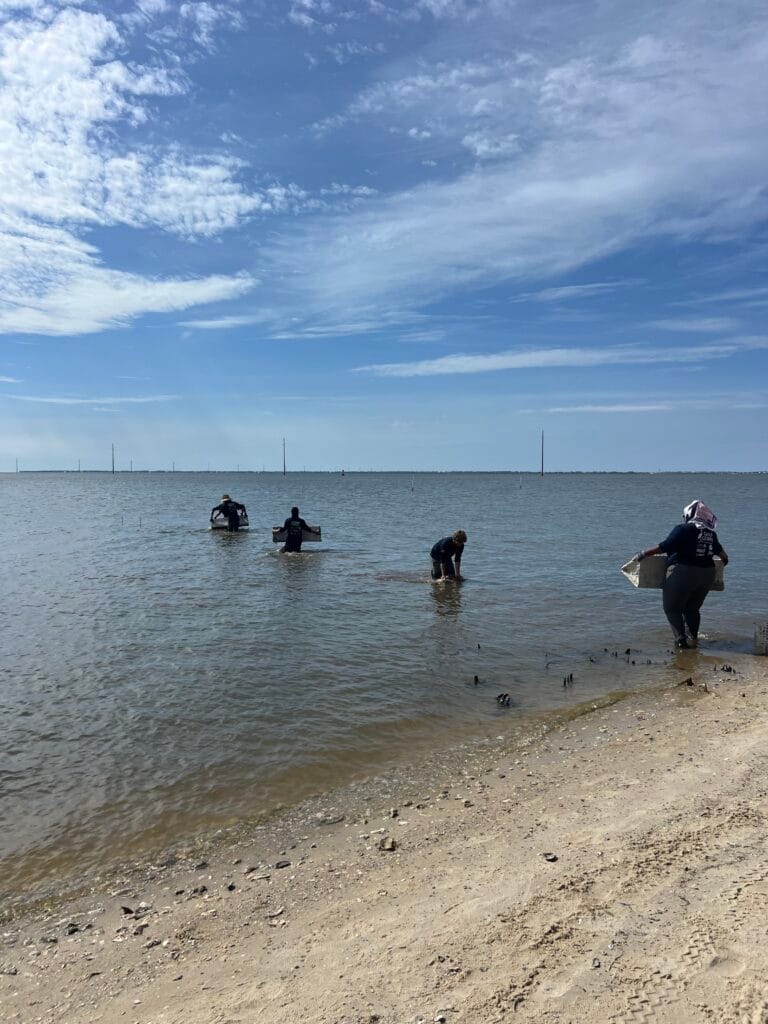
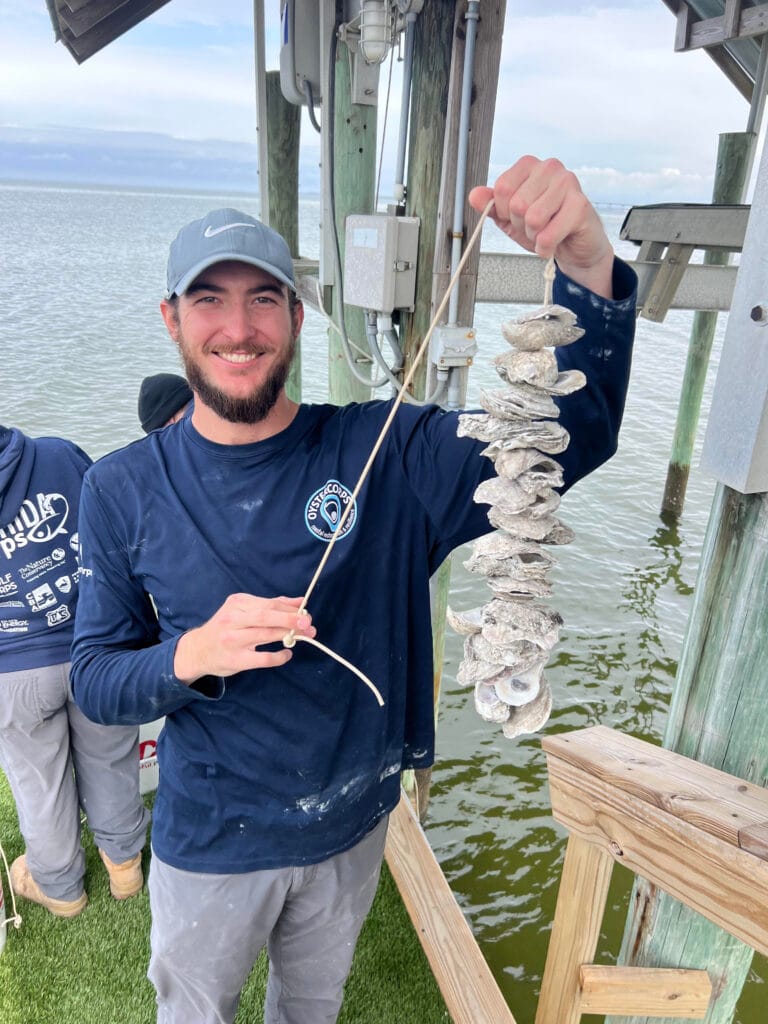
The FloridaCorps also helps us implement a new Vertical Oyster Garden (VOG) program. VOGs are recycled cured oyster shells strung on a rope and hung from a dock that builds oyster habitat. Homeowners that have a dock where there is a presence of oysters can sign up to be part of the program. The Restoration Coordinator and FloridaCorps will perform a site visit to determine if it is suitable for VOGs and, if appropriate, hang up to 50 VOGs on the dock. There is also an optional monitoring program where the Restoration Coordinator visits locations quarterly to evaluate the VOGs. After a year, the VOGs are removed and the shells are used as restoration material or to seed other restoration projects.
The Reserve and FloridaCorps Internship
To enhance collaboration between the FloridaCorps and the Reserve, the Restoration Coordinator was able to hire Faith Causey as an intern as she completes her contract with the Corps. Faith is an Apalachicola native who has nearly completed her two years with the OysterCorps, a subgroup of the FloridaCorps. Her experience with the Corps, her work ethic, and her creativity has made her an asset to the VOG program. Within the few months she has been with the Reserve, she has designed marketing material for the VOG program, reached out to interested homeowners about the VOG program, and conducted site assessments and installations for VOGs and living shorelines. She also splits her time with the Reserve’s aquarist, Lisa Bailey, where she is learning how to monitor and maintain aquariums.
Seed Germination
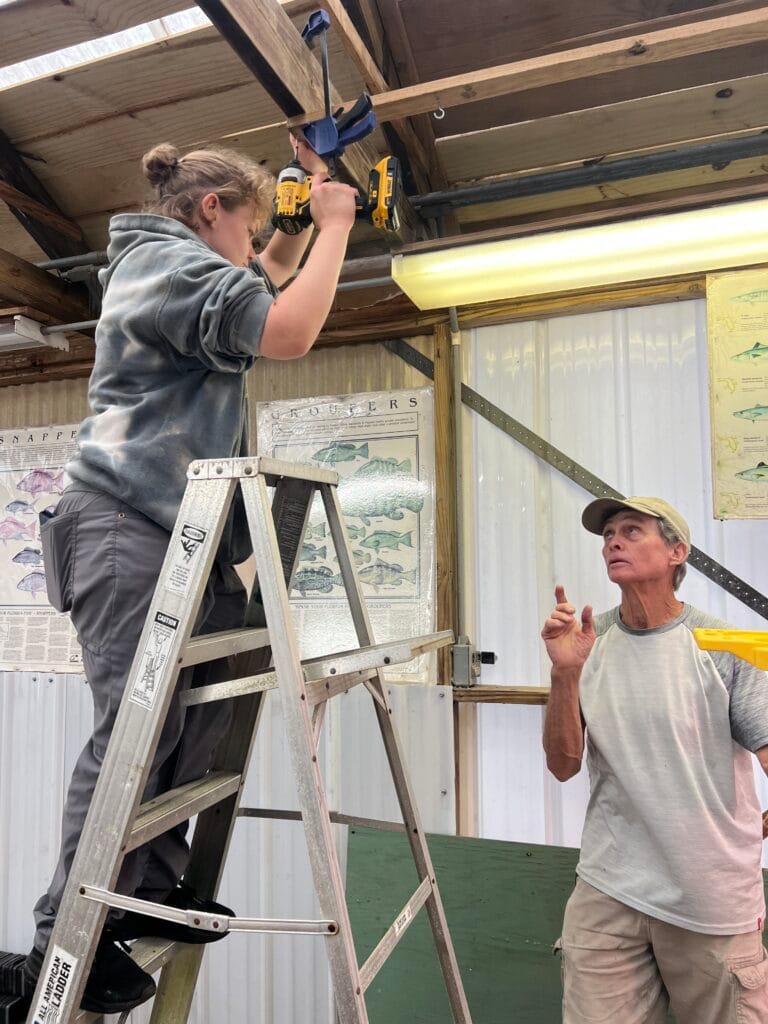
Many of the restoration projects at the Reserve require plants. The FloridaCorps grows Spartina alterniflora at the Reserve’s nursery for living shoreline projects. Spartina is an excellent marsh plant with roots that can secure sediment that can ultimately cause the shore to accrete sand. The Reserve is also in the process of developing their greenhouse by installing grow lights and plant beds. The Restoration Coordinator envisions that the space can be used by partners to germinate seeds, specifically for tupelo and cypress trees. George Watkins from The Reserve’s Maintenance Department and Holden Foley from the FloridaCorps have been instrumental in the design and building of the interior of the greenhouse.
Education Program
By Robert Gorecki, Education Coordinator
This past year we saw over 22,344 walk-in visitors in the Nature Center, which is up over 10% from last year. We also saw an additional 2,970 visitors during more formal education programs for a total of over 25,000 visitors.
Ongoing Programs
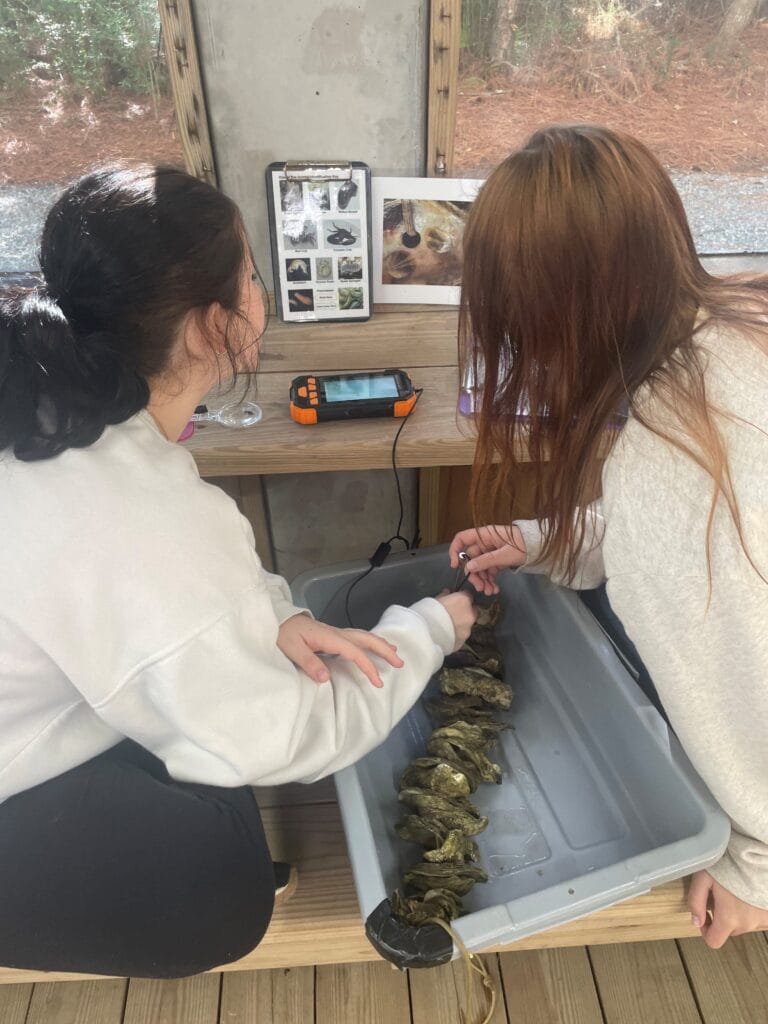
Many successful education programs continued this year, including our field trips for pre-K, 1st, 3rd, 5th, and 7th grades. The third grade dig into oysters got expanded to include stewardship when students created VOGs with the FloridaCorps. These were then hung from a local dock. The beauty of this partnership is that it also expanded to include high school field trips. Franklin County high school students came to the Reserve twice this year. The first time, they journaled about oysters, and did a biodiversity inventory and spat recruitment study on the VOGs that had been created by the third graders and hung from the dock. Spat settlement was very impressive, and it was fun to see who else was living on this miniature habitat. The seniors then reported back to the third graders to update them on their bay stewardship. The second high school field trip included an overview of river, bay, and gulf habitats where the students observed the flora and fauna at several locations and then compared what we found at these sites to our water quality readings that they measured on the trip. Field trips for homeschool groups continued to expand this year. We also had a college class come out with us from FSU on the tideline to study the geomorphology of the bay and changes in water quality from the river to the Gulf. There were also field trips for adults during the year, including one church group that came and did nature journals on shells. A culinary group visited our living shoreline and learned about the ongoing fifth grade role in our ecosystem. We continued our partnership with the Ed. Corps High School; these students went on field trips once a month traversing the watershed from Torreya to Little St. George Island. There were some significant community events that took place as well as our annual Estuaries Day celebration with 680 participants. Lisa Bailey has decided to step down from leading the Estuaries Day preparations after 26 years and our Education staff have some big shoes to fill for next year.
Educational Events
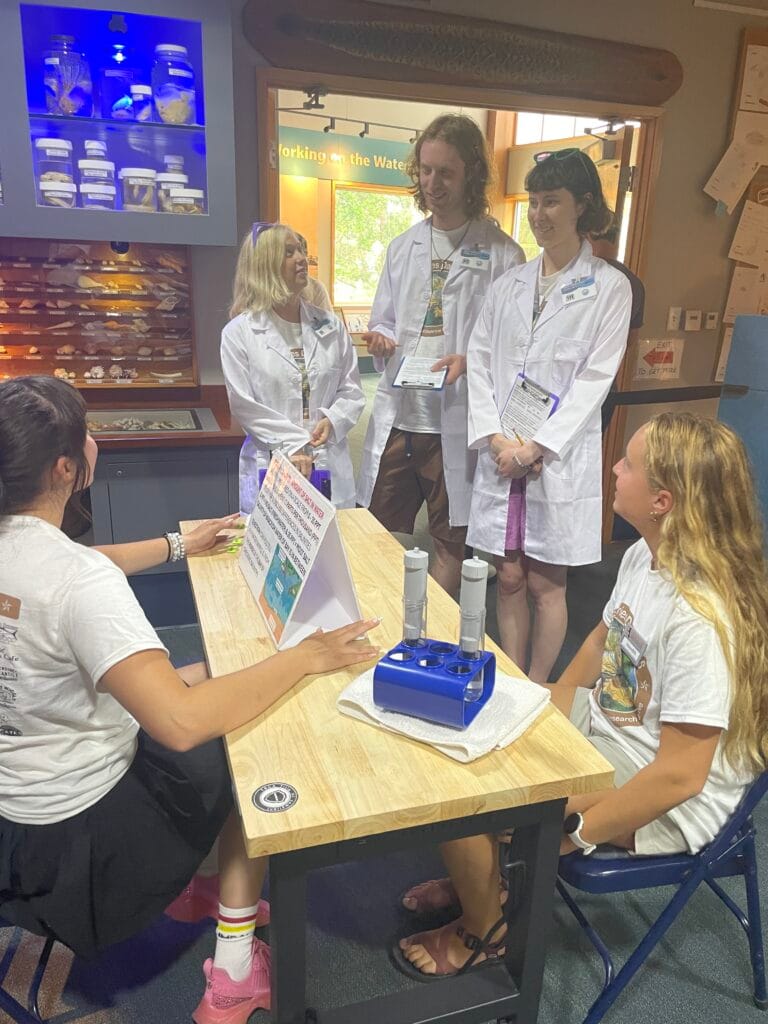
The Reserve Education team had a presence at the Apalachicola Seafood Festival and the FSU Marine Lab Open House where we debuted our amazing traveling microscope that can be viewed in a pop-up dark room. In the Nature Center, Joan Matey presented her stunning collection of Fishy Fashions in a temporary exhibit that was opened in grand fashion by a runway (breezeway) fashion show featuring Reserve staff that brought many people to the Reserve, who previously had no idea we existed. All of her costumes are created from marine debris and offered us a creative way to tell the story of keeping our bay pristine. The second Monarch Festival was also an engaging event that followed a huge effort to collect and raise enough monarchs for every 7th grade student to tag one and still have enough for the event as well. Visitors also had the opportunity to observe a new method of tracking monarchs using tiny solar powered trackers with a representative from Xerxes doing live tagging demonstrations.
Five extraordinary artists from as far away as the UK and California also used the Reserve as a site for a plein air painting as part of the Forgotten Coast Plein Air event. Beth Appleton, who was first inspired by the life in a single drop of water, featured the Reserve at her show at the LeMoyne Art Gallery in Tallahassee. The Joe Center for the Arts also held an event about nature journaling in which our estuary was showcased.
Reserve Events and Displays
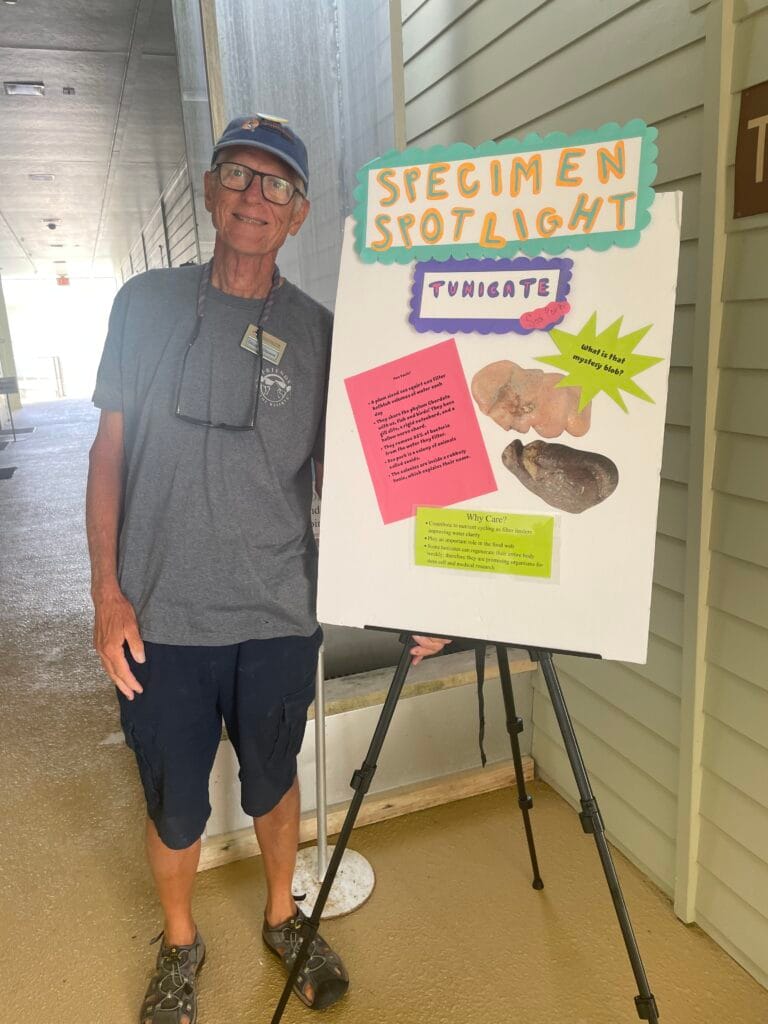
Besides offering our summer turtle talks, the Reserve now offers two new weekly events. Summer Spotlights are daily short talks featuring aspects of the watershed like tupelo trees, tonging for oysters and flounders. Wednesday Wonders are weekly journaling classes open to anyone. They include every medium, as well as poetry and drawing examples in situ or from what we can observe on digital microscopes. There are also two new permanent displays found just outside the Nature Center. One features ways in which oyster restoration is carried out using rag pots, prisms, Pervious Oyster Shell Habitats (POSH), and reef balls. The other is a display where visitors can compare their own “wingspans” to those of birds in our bay.
Teachers on the Estuary
The Reserve’s Education staff presented at the Guana Tolomato Matanzas (GTM) National Estuarine Research Reserve’s Teachers on the Estuary program (TOTE), as well as our own TOTE, which was in partnership with FSU Marine Lab. Both TOTEs were a success. Each program garnered stellar reviews on the surveys sent out by NOAA. Here is a sampling from the comments submitted for the Reserve’s class: “I realized that there are ways to encourage even my youngest students to observe and try things.” “I learned to incite curiosity about the natural world around us rather than just leading students to an answer.” “These days were amazing, very professional and so much fun!” “I grew up in this area and had no idea about what an estuary is. I learned so much about an area I thought I knew a lot about!”
Training and Engagement Program
By Anita Grove, Training and Engagement Coordinator
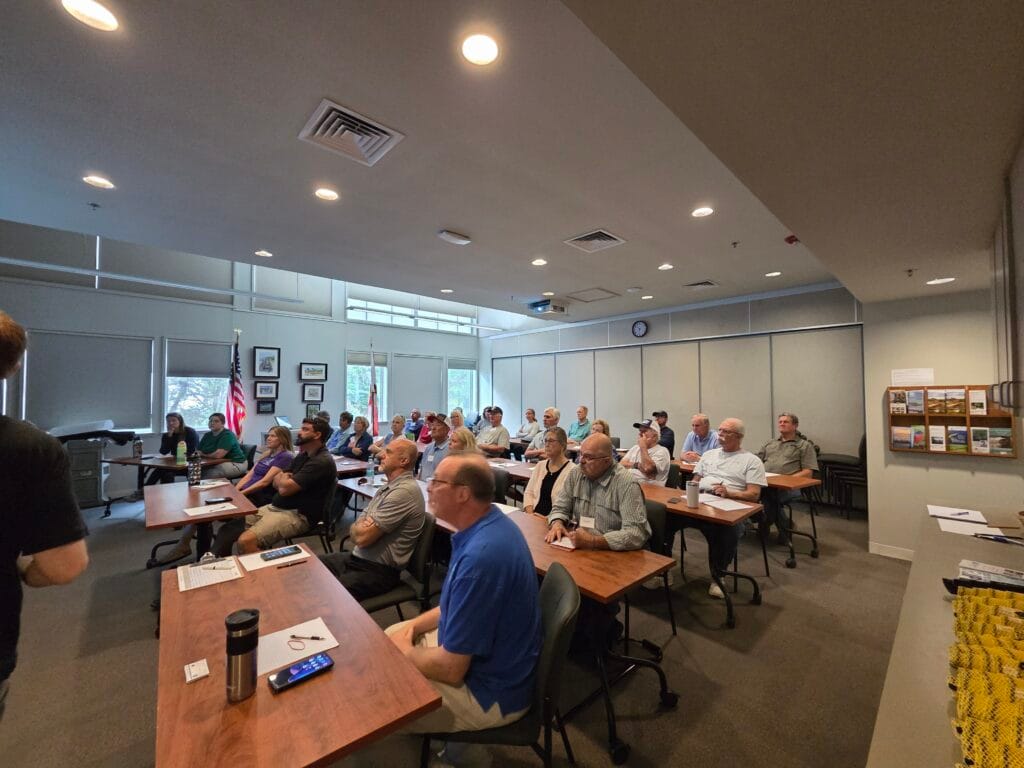
The Reserve’s Training and Engagement Program (TEP), formerly known as the Coastal Training Program, fosters collaboration with leaders and the community to increase knowledge about our connected ecosystems to enhance stewardship within the watershed. The TEP section provides resources, technical assistance, and training to assist decision makers and their staff in making sound coastal management policies that protect the Apalachicola Bay and River’s resources, which are vital to health of our estuary, our economy, and our quality of life. To accomplish this, we regularly attend meetings of the Franklin County Commission and the City of Apalachicola to stay up to date on needs and issues and to strengthen these partnerships. Anita Grove and Svetlana Vikhlyantseva oversee the TEP section.
Priority Audiences and Issues
In addition to decision makers, priority audiences include land managers, restoration practitioners, seafood dealers and harvesters, realtors, planners, environmental consultants, homeowners and neighborhood associations, researchers, builders, marine contractors, tourist industry representatives, boaters and fishing guides, and eco-tour guides.
Priority issues include understanding the impacts of reduced freshwater inflows on the Apalachicola Bay system, nature-based infrastructure solutions, increasing community resilience to coastal hazards, restoration of Apalachicola Bay oysters, aquaculture, and preservation of cultural resources. This year we offered eight formal workshops for 127 people, for a total of 104.5 training hours.
Stewardship Series
Our Stewardship Series offers programs to help residents better understand our connected coastal ecosystems while fostering stewardship. These courses increase awareness of the region’s natural resources and inspire actions that support long-term conservation. We produced and delivered 23 training courses, reaching 251 participants, with 59.5 hours of programming.
Technical Assistance
Technical assistance provided this year included:
Partnering with the FloridaCorps in conjunction with the Restoration Coordinator to move forward shoreline restoration projects, oyster shell recycling, VOG projects, expanding the oyster shell recycling program, and exploring new uses of recycled shell. We organized an aquaculture workshop where FloridaCorps members worked with two local oyster farmers to learn about oyster aquaculture. TEP also held a restoration training week and two workshops with The Nature Conservancy’s (TNC) Scaling Up Nature-Based Solutions (SUNS) program.
We continued to work with the City of Apalachicola on infiltration in the stormwater system to reduce nuisance flooding and nonpoint source runoff into the bay and river.
TEP staff assisted The Partnership for a Resilience Apalachicola Bay in building capacity by hosting monthly meetings of stakeholders, strengthening community partnerships, and raising community awareness of bay recovery and restoration projects. The Reserve works closely with facilitator Betty Webb and committee members to achieve management and restoration goals.
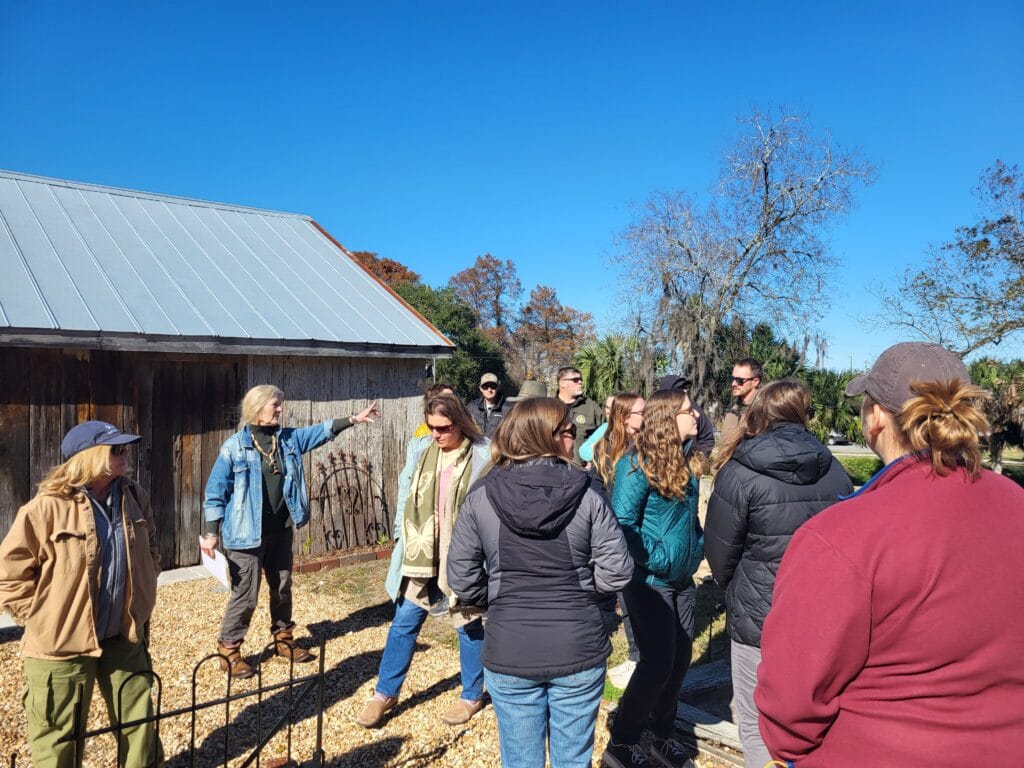
TEP facilitated a workshop, Collection of Historical and Cultural Resources on State Lands, for 21 area land managers and law enforcement officers. The training detailed the rules and regulations surrounding historical resources found on sovereign submerged lands and the proper authorizations required for their collection.
TEP staff contacted the Northwest Florida Water Management District to inquire about inclusion in a pilot project to help St. George Island improve its wastewater treatment to protect water quality in Apalachicola Bay. We also worked with the Northwest Florida Watersheds Partnership Program to help identify needs for water quality, water supply, and habitat restoration in the Apalachicola sub-basin.
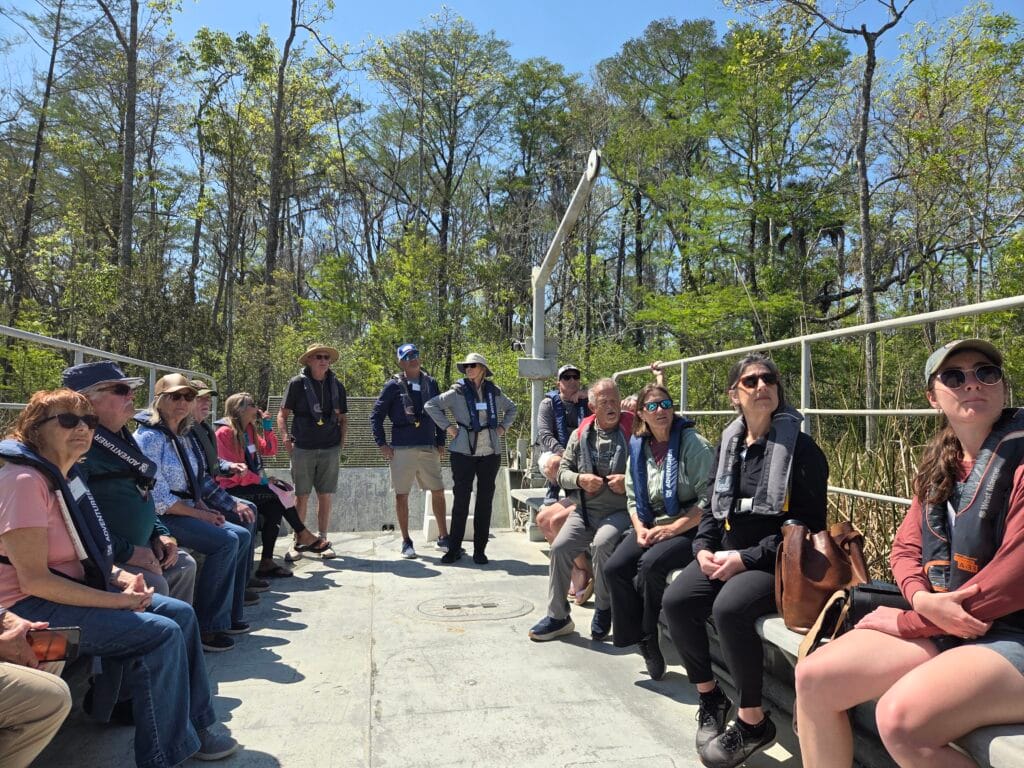
A field workshop was hosted in conjunction with the Realtors Association of Franklin and Gulf Counties. Fourteen realtors participated in the workshop, which included a trip up the Apalachicola River to understand the connection between the Apalachicola River and Bay, and the impact of low water flows and development pressures on the system. The workshop resulted in a survey of the realtor’s needs which TEP staff followed up with resources.
TEP collaborated with Franklin County Tourist Development Council (FTDC) staff to update information on endangered nesting sea turtles and develop a brochure highlighting threats to sea turtles and Franklin County’s Leave No Trace ordinance. We developed an educational campaign to reduce conflicts between nesting sea turtles and summer visitors on St. George Island by providing outreach materials and resources to vacation rental companies. In partnership with the FTDC and the Chamber of Commerce, educational materials were distributed to vacation rental companies, visitor centers, hotels, and businesses to increase public awareness, encourage responsible beach practices during nesting season, and reduce human impacts on nesting sea turtles.
Sci-Café
We produced 9 virtual Sci-Cafés this year with topics such as Quantifying River Flow Metrics for the Apalachicola River, Measuring the Productivity of Apalachicola Bay, Monitoring Apalachicola’s Oyster Populations. Recordings of these talks can be viewed on our Recorded Virtual Events page.
To stay up-to-date on upcoming events at the Reserve, visit the Events page on our website.